

On Redirection
How Turning Inward Will Be Your Greatest Advantage in 2026
While the entire industry has our heads turned toward trends, algorithms, and what everyone else is building, the real growth opportunity has been sitting behind us—in the relationships we've already cultivated and the creative instincts we've been taught to ignore.
What if your best growth opportunity isn't out there in the market noise—but right here in the work you've already done and the way only you see the world?
In 2026, your competitive advantage won't come from watching what everyone else is doing. It'll come from two places most creatives have stopped looking: your existing client relationships and your own creative instincts.
This is the redirect—turning your attention from what everyone else is doing to what only you can see.
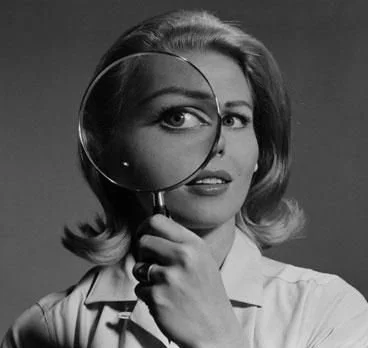
Woman With Magnifying Glass, C.1960s
THE CYCLE WE’RE STUCK IN
We’ve been stuck in the cycle of reactive building for too long. The cycle looks a lot like:
Watch what competitors are doing, chase what's trending, pivot when algorithms change, react to market shifts, repeat…monthly.
No wonder everyone's burnt out. We've been chasing virality and growth that's largely outside our control, exhausting ourselves through constant adaptation while disconnecting from what made us start in the first place.
The deeper problem: When you build reactively, you're always behind. By the time you notice a trend, it's already moving. By the time you implement the "hack," it's already saturated.
and while your attention is distracted to this constant chase, the answers are sitting right in front of you:
First, your past clients—the ones who already paid you, loved working with you, and want to tell others about you. You don’t even need a lot, just enough for you to start to see patterns. And the most beautiful thing?
You're the only person with this information.
Your clients hold every strategic answer: what to build next, who to work with more, how to grow through their networks.
Second, your own creative instincts. Your intuition that holds the answers to how you solve problems, what makes the work yours (not templated), where you want to be stretched and challenged.
And it's so important to nurture those instincts, because if you don't, your work becomes a reflection of what the market rewards. Not what you're actually here to make.
But you can't hear either when you're drowning in what everyone else is doing.
A CATEGORY OF ONE
Most creatives get stuck in the market research, but that only tells you what everyone is doing. Your clients tell you what no one else is solving—for them, specifically.
When you build from their needs, you're not competing. You're creating something adjacent to the noise.
This makes competition irrelevant and allows you to build a body of work that is built on trust - and compounds over time.
As AI makes us increasingly skeptical of anything we see online, standing out by doing what everyone else is doing—louder—doesn't work anymore. We're already seeing this shift in the way people use websites, the compressed buyer journey, the fall of the influencer, the rise of micro-audiences.
A lot of this has always been out of your control.
Here's what's not changing: The relationships you tend to. The way you design a solution shaped by your specific taste. How you make the intuitive leap that has no data behind it yet. How you care about the work in a way that shapes every detail that your clients can feel.
Your competitive advantage in 2026 isn't doing what the market says works. It's doing what only you would think to do—informed by the clients who already trust you to do it.
This requires two things most creatives have stopped prioritizing: deep client listening (not market analysis) and creative courage (not trend replication).
Both require you to stop watching everyone else.
Why This Matters
More in 2026
Your creative practice won’t be built by watching everyone else.
It will be built by paying close attention to the specific needs of the specific people who already trust you.
Growth that lasts doesn't come from algorithms. It comes from architecture.
2026 could be the year you stop reacting and start building from what you actually know.
The market will keep changing. Your clients will keep telling you what they need.
Choose which one you're going to listen to.
— Caitlin Backeris
Full Excerpt from Field Notes. This is where I share what I'm learning about building businesses that grow through depth, not noise. If this resonates, subscribe here to get a bit more personal in your inbox.
